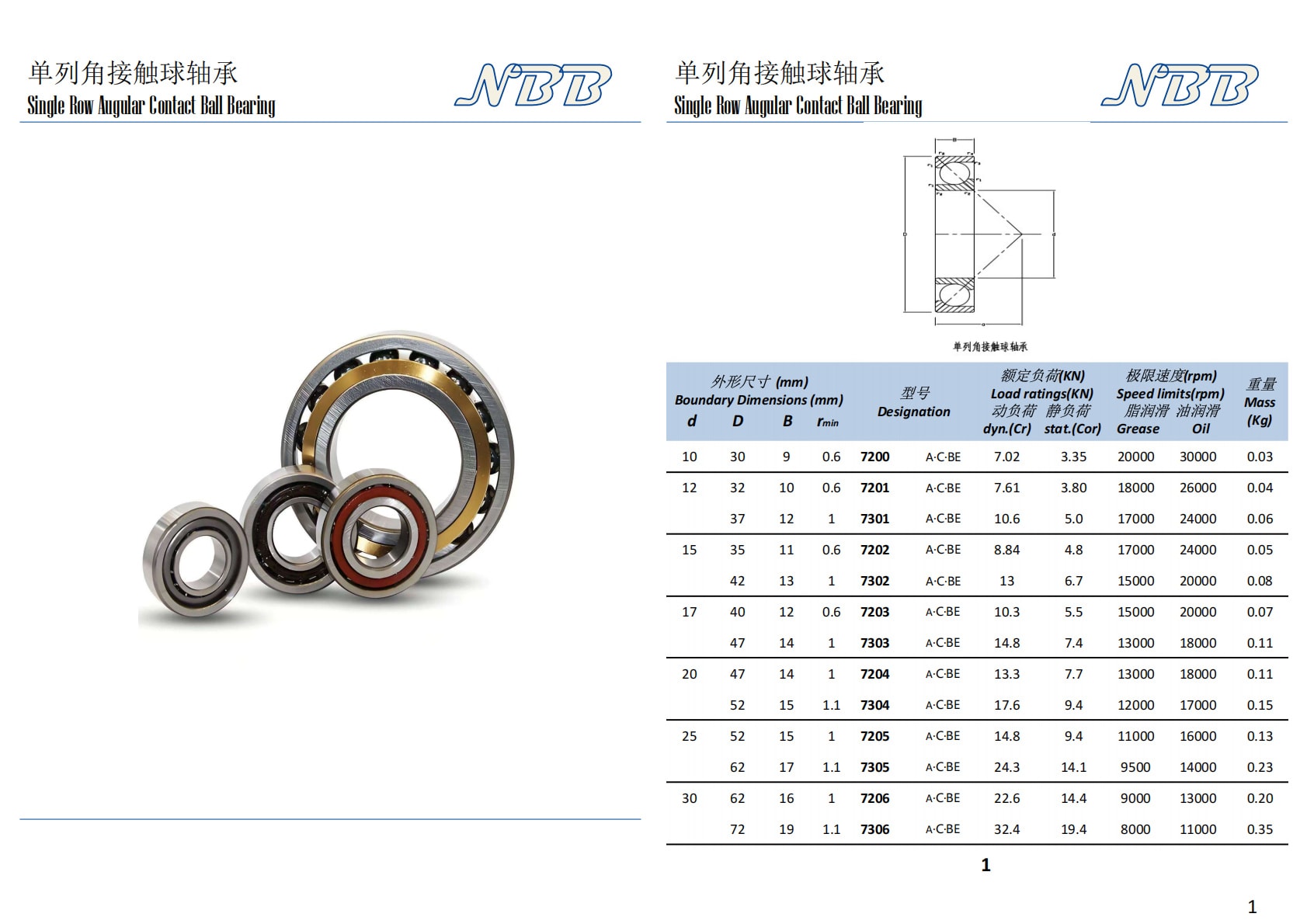
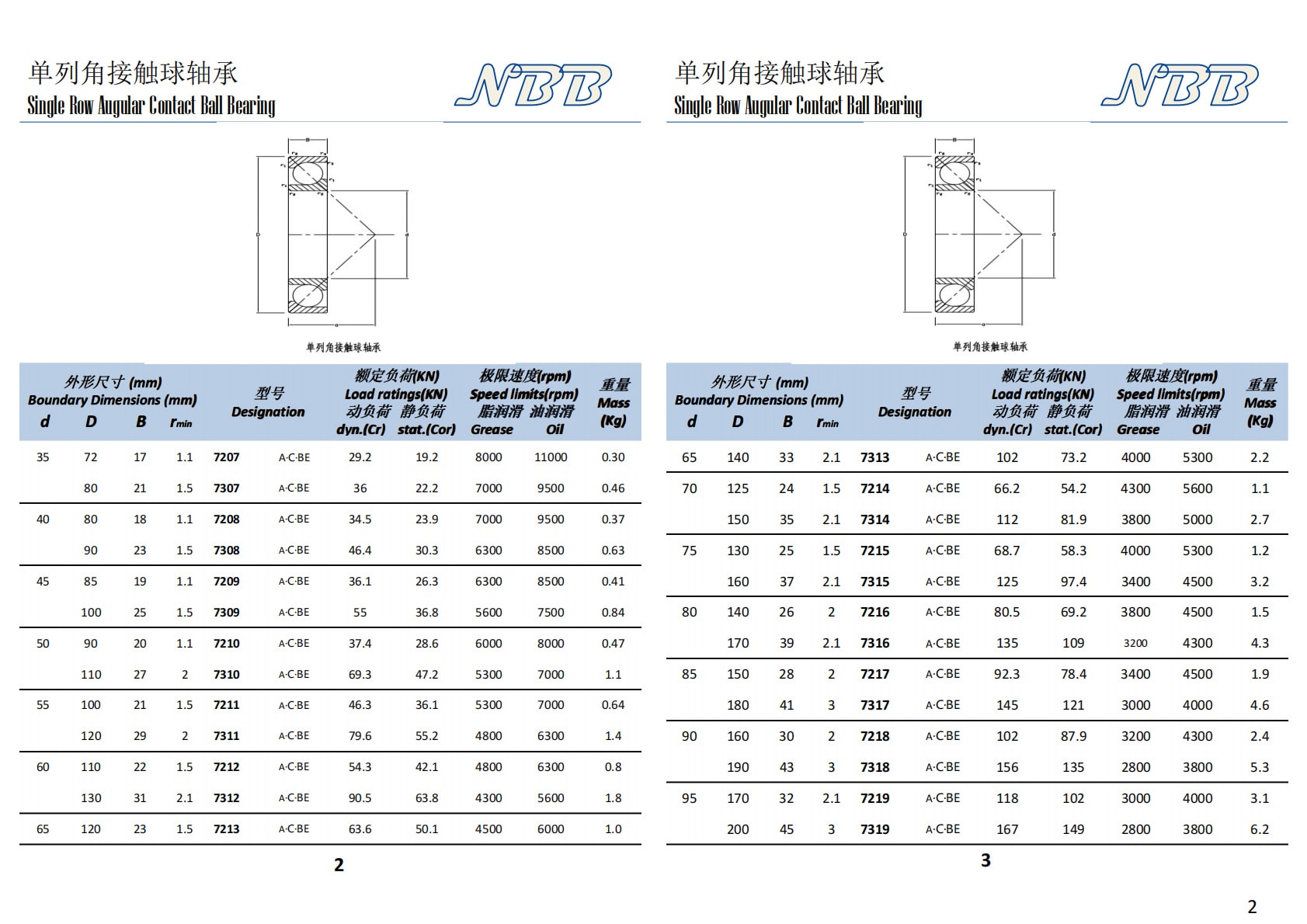
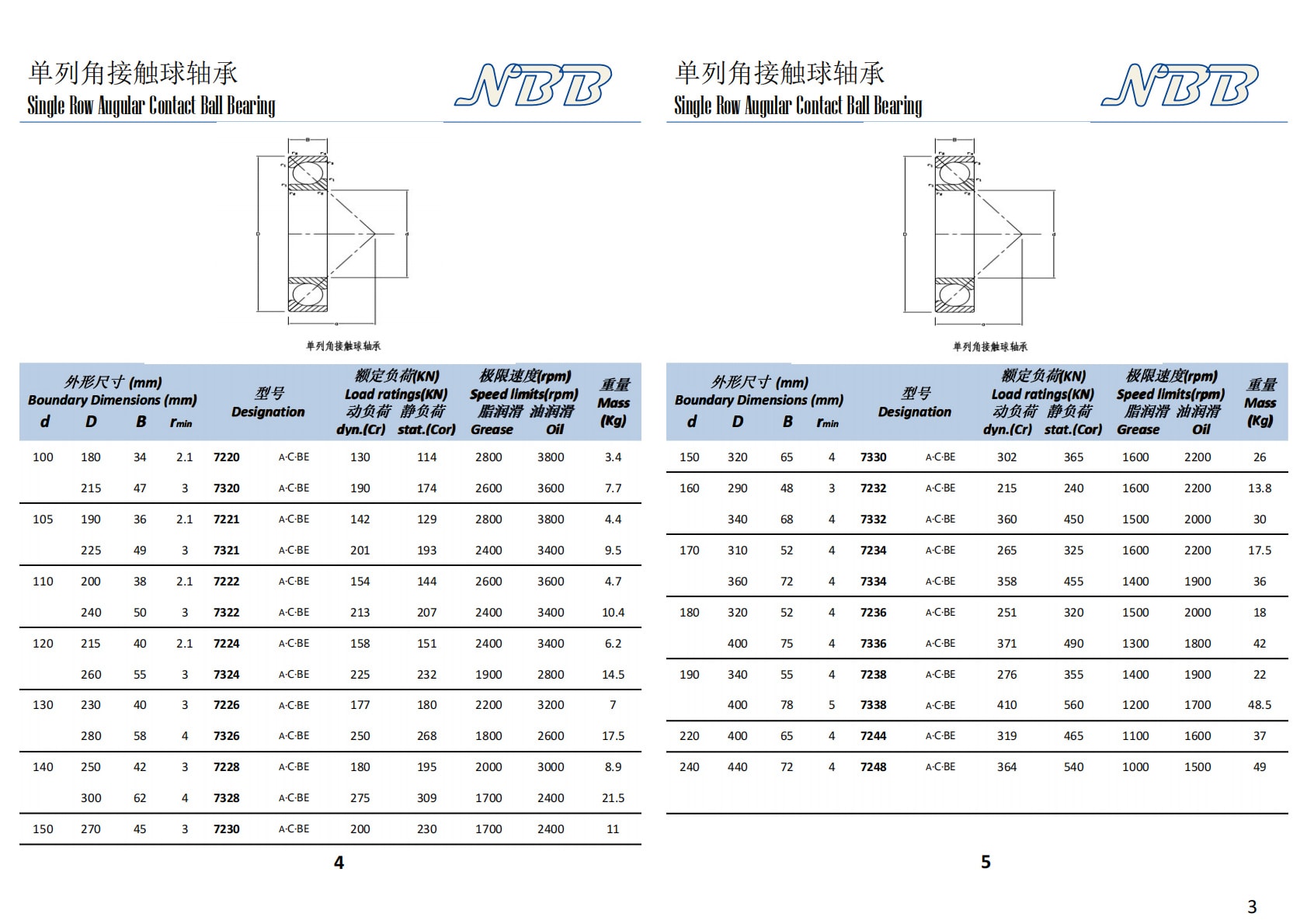
High-speed Machine Tool Angular Contact Ball Bearing 70 Series

Product Description
One of the key features of high-speed angular contact bearings is their ability to bear large one-way axial loads. The cage material used in these bearings can vary and may be made from steel plate, brass, or engineering plastic. The forming method of the cage can also vary, with options including stamping or turning. The selection of the cage material and forming method will depend on the bearing form or use conditions.
Combination angular contact ball bearings, double row angular contact ball bearings, and four-point contact ball bearings are some of the different varieties of angular contact ball bearings that are available. Double row angular contact ball bearings are made to handle high radial loads and moderate axial loads, whereas combination angular contact ball bearings are made to manage both radial and axial stresses concurrently. Ball bearings with four points of contact are made for strong axial rigidity and high load capacity.
In summary, high-speed angular contact bearings are a versatile bearing solution that is well suited for high speed applications requiring both radial and axial load handling. These bearings are available in a variety of forms and materials, making them a flexible solution for many applications. Whether you need a bearing for a high-speed machine tool or a heavy-duty industrial application, there is likely an angular contact ball bearing that will meet your needs.
Product Applications
The main applications of angular contact ball bearings:
* Single-row angular contact ball bearings: machine tool spindles, high-frequency motors, gas turbines, centrifugal separators, small car front wheels, differential pinion shafts
* Double-row angular contact ball bearings: oil pumps, Roots blowers, air compressors, transmissions, fuel injection pumps, printing machinery.
Installation Precautions for High-Speed Machine Tool Angular Contact Ball Bearings
The installation of high-speed machine tool angular contact ball bearings is a highly precise and cleanliness-demanding task. The following are key precautions for high-speed application scenarios:
Environment and Preparation: Creating a Surgery Room Level Environment
● Cleanroom operation: Must be performed in a dust-free, clean room; ideally a Class 1000 cleanroom.
● Precision matching: Bearings need careful matching, especially internal and external spacers, with parallelism controlled below 1 micrometer.
● Cleaning and lubrication: Clean thoroughly before installation; during cleaning, keep the inner ring slope facing upward. After air-drying, immediately add the specified amount of grease or oil mist. Grease fill quantity is typically 20%-30% of the bearing internal space; excessive amount will cause churning heat at high speeds.
Installation Process: Precise Force Application, Strictly Prohibit Violence
● Specialized tools: Must use specialized tools (such as sleeves, hydraulic presses) for uniform force application; striking is strictly prohibited.
● Hot mounting: For interference fits, an induction heater is recommended for uniform heating. Heating temperature is typically controlled at 80-100C, and must not exceed 125C or use open flames.
● Correct direction: Confirm the bearing force direction (typically the outer ring has "V" or notch markings); choose back-to-back (DB) or face-to-face (DF) configuration based on spindle design. Installing backwards will cause axial movement and temperature rise runaway.
● Fixing and locking: It is recommended to use locking nuts with axial anti-loosening bolts; the axial runout of the mounting face should be less than 2 micrometer.
Preload and Lubrication: Keys to High-Speed Performance
● Preload: High-speed spindles typically use Light Preload. Excessive preload will cause excessive temperature rise or even burn out the bearing at high speeds.
● Lubrication method: Oil mist lubrication or oil-air lubrication is preferred for high-speed conditions; if grease lubrication is used, the fill quantity must be strictly controlled (20%-30%).
Post-Installation Inspection and Running-In: Verification and Running-in
● Static inspection: Manual rotation should be smooth without sticking; radial runout target is less than or equal to 0.005mm, and axial movement target is less than or equal to 0.01mm.
● Dynamic running-in: Newly installed bearings must undergo stepped trial operation. Run at 500-1000 rpm no-load for 10-15 minutes first; if no abnormality, gradually increase to 50% and 80% of rated speed, running for 20-30 minutes each.
● Temperature rise monitoring: The temperature rise should not exceed 40C. If temperature rises sharply or abnormal noise occurs, stop the machine immediately.
Success depends on fine control of four dimensions: cleanliness, installation precision, preload, and lubrication.